|
{preheader}
|
Editor’s letter
Acts threatening the safety and peace of the world’s people continue unabated. On February 28, the United States and Israel invaded Iran. Key Iranian government figures, including Supreme Leader Ali Khamenei, Defense Minister Aziz Nasirzadeh, and Islamic Revolutionary Guard Corps Commander Mohammad Pakpour, were killed in the U.S. and Israeli bombing.
The sacrifice of innocent civilians continues. Over 100 children were killed in an Israeli airstrike on a girls’ elementary school in Iran. The United States and Iran had just concluded their third round of nuclear negotiations under Omani mediation and were preparing for a fourth round when they invaded Iran.
Actions threatening democracy and peace only endanger workers’ safety and bring sacrifice. Let us watch these unjustified attacks and stand in solidarity with the people under attack.
We hope that you will continue to be interested in our activities. Please pass it on to others. If you have any questions, please reply to this email.
Thank you.
|
|
|
| |
|
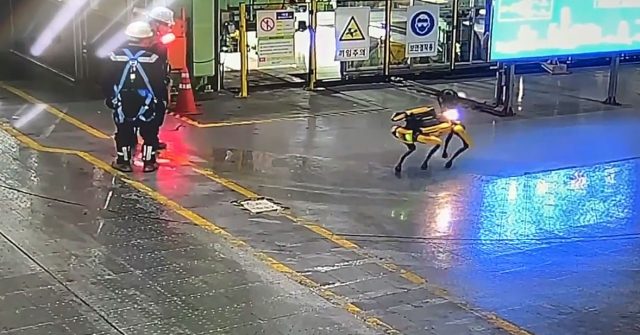
While the use of electronic surveillance to monitor workers’ performance and intensify daily oversight is widespread, examples of proactive union responses remain rare. In many cases, unions even support the adoption of such surveillance under the banner of accident prevention, without raising significant objections. When framed as a matter of public safety, the introduction of electronic monitoring gains even stronger persuasive power. The railway sector, however, stands out as a site where workers are actively challenging CCTV policies focused on surveillance and punishment under the guise of passenger safety. Joo-hoe Jung, head of the Guro Train Crew Branch of the Seoul Regional Headquarters of the Railway Workers’ Union, pointed out that the Ministry of Land, Infrastructure and Transport intends to install CCTV in train and subway driver cabins solely to monitor and record labor processes. In fact, the Railway Safety Act was amended in 2016 to mandate the installation of in-vehicle video recording devices. However, after sustained protests by railway workers, an exception was included in the enforcement regulations. If a train already has a driving recorder, no separate video recording device needs to be installed. Despite this, the Ministry has continued to push forward, commissioning a study on “CCTV installation in train driver cabins,” which was completed last year, accelerating measures aimed at reducing human error among engineers.
|
| |
| |
|
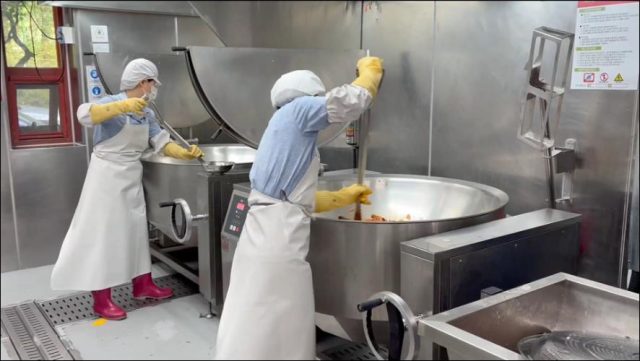
School meals are a core public welfare policy area encompassing the protection of students’ right to health, dietary education, and regional circular economies. However, despite the nationwide expansion and institutional establishment of school meals, the working conditions of the meal workers who actually sustain this system have long been neglected. In particular, excessive student-to-cook ratios, increased variety of side dishes, complex cooking processes, and poor working conditions increase labor intensity and health risks, threatening the sustainability of school meals. This study aims to reexamine the quality and sustainability of school meals from the perspective of ‘labor sustainability’ and derive structural improvement measures.
|
| |
| |
|
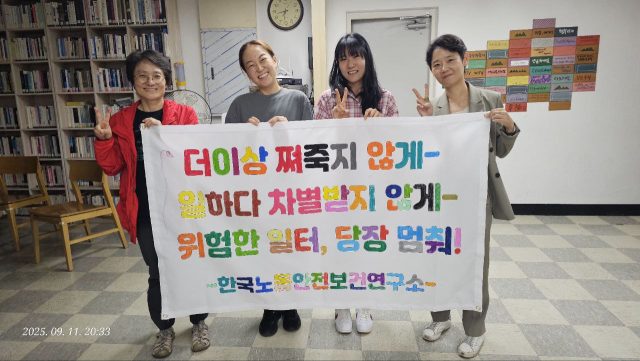
KILSH is a public interest civil society group focusing on workers’ health and safety. We are working for healthy working conditions for all workers, and for workers to have greater autonomy in their workplaces. We meet and educate workers and trade unions on how to prevent occupational injuries and describe how to get involved in changing the working environment.
We have worked on important issues such as musculoskeletal disorders, long working hours, overwork and mental illness. We have continued our work on workers’ health rights at small-sized businesses, female workers’ health, the climate crisis, the right to stop dangerous work and how risk assessment is conducted and used. These issues are described in our monthly magazine on occupational safety and health with different topics every month. Our translation team provides information about our activities in English.
|
| |
|