|
{preheader}
|
Letter from the Editor
Dear subscribers,
It seems that for the next few months, due to the severe climate crisis, we’ll be greeting each other by asking about one another’s health. I hope everyone stays well.
Recently, migrant workers in South Korea achieved a victory. HD Hyundai Heavy Industries, which had hired technical migrant workers in the shipbuilding industry, discriminated against them by deducting meal allowances from their contractual wages and withholding performance bonuses—treating them differently from Korean workers. Furthermore, last May, Hyundai Heavy Industries demanded that workers sign employment contracts with cuts to their base pay and began pressuring migrant workers who refused. However, despite pressure from management, the migrant workers refused to sign the contracts and continued their fight through rallies and other actions starting in June, finally holding a nationwide joint action rally on July 5. (Prior to the joint action, Hyundai Heavy Industries announced plans to provide free meals to migrant workers, retroactively reimburse the full amount of meal allowance deductions, and pay performance bonuses without discrimination.)
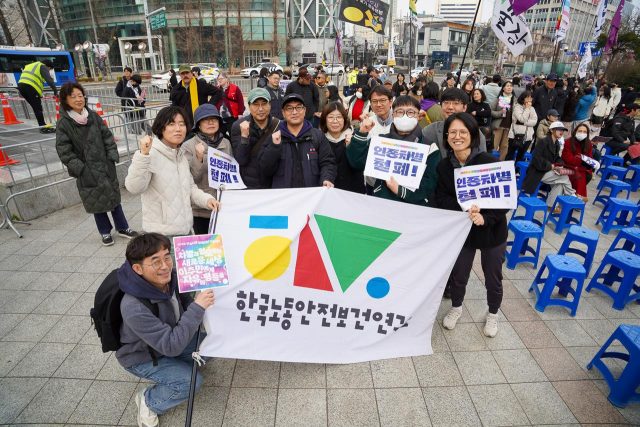
While fair compensation for work is, of course, essential, the company responded with discrimination. The migrant workers fought back against this discrimination. The migrant workers who gathered at the rally that day also joined the labor union. It was an event to show support for the migrant workers who stood up to fight against these difficult conditions.
We hope that you will continue to be interested in our activities. Please pass it on to others. If you have any questions, please reply to this email.
Thank you.
|
|
|
| |
|
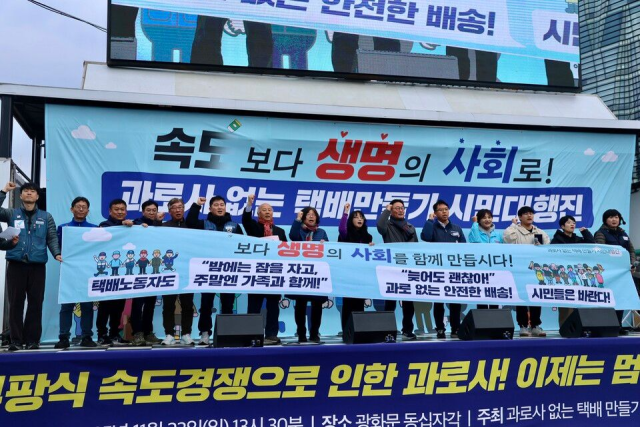
Recently, the issue of nighttime work—which has continued to expand in our society—has become the subject of social debate, alongside discussions such as banning dawn delivery or extremely late-night delivery. The Working Time Center, which has long raised concerns about the problems of nighttime work, has organized this special feature on workplaces in order to address the major issues, points of contention, and possible alternatives related to this topic.
In this feature, we aim to diagnose the current state and problems of nighttime work occurring in the logistics industry, explain why nighttime work is problematic, and discuss possible alternatives, including legal regulations that could address these issues. In addition, we examine the current regulatory status of nighttime work both in South Korea and abroad, and based on this review propose practical measures to regulate fixed nighttime work. We hope that this discussion will expand more broadly within society.
|
| |
| |
|
This study was conducted with workers belonging to the LG U+ Non-Regular Workers Branch under the Hope Union Branch of the Korean Public Service and Transport Workers’ Union (KPTU). These workers are responsible for visiting customers’ homes to perform tasks such as internet installation and repair, schedule management, device inspection, and support. Since 2023, the subsidiary has implemented labor management policies including reduced unit work time, intensified performance pressure, and strengthened disciplinary measures, leading to a drastic change in the working environment. These changes have increased workers’ labor intensity and stress levels while heightening the risk of accidents during work processes. Indeed, the industrial accident rate surged sharply in 2023 and 2024 compared to 2022, reflecting the reality of workers forced to perform tasks at accelerated speeds under intensified control and pressure.
|
| |
| |
|
KILSH is a public interest civil society group focusing on workers’ health and safety. We are working for healthy working conditions for all workers, and for workers to have greater autonomy in their workplaces. We meet and educate workers and trade unions on how to prevent occupational injuries and describe how to get involved in changing the working environment.
We have worked on important issues such as musculoskeletal disorders, long working hours, overwork and mental illness. We have continued our work on workers’ health rights at small-sized businesses, female workers’ health, the climate crisis, the right to stop dangerous work and how risk assessment is conducted and used. These issues are described in our monthly magazine on occupational safety and health with different topics every month. Our translation team provides information about our activities in English.
|
| |
|