|
{preheader}
|
Editor’s Letter
We apologize for the delay in our March newsletter.
In March, a fire broke out at a factory in Daejeon, South Korea, that manufactures engine valves for automobiles and ships. Fourteen workers were killed and 60 were injured.
The interior of the factory where the fire occurred was covered in oil residue. Cutting fluid mixed with metal to form sludge, and these conditions likely accelerated the spread of the fire. The oil-soaked building was constructed with sandwich panels, which caused a massive release of toxic gases during the fire, leading to the suffocation of workers. Furthermore, the break room—where 9 of the 14 workers lost their lives—was an illegally expanded space; reportedly, it was so cramped that it was difficult to even locate an exit. This likely made it difficult for the workers inside the break room to evacuate.
Although the company had previously agreed with the labor union to implement safety and health measures, these measures were never carried out. The absence of measures to prevent industrial accidents—and, above all, the lack of safety and health activities involving worker participation—is what is most painful to reflect upon. We hope everyone remembers that such major industrial accidents must not occur again, and that worker participation is essential to ensuring this.
We hope that you will continue to be interested in our activities. Please pass it on to others. If you have any questions, please reply to this email.
Thank you.
|
|
|
| |
|
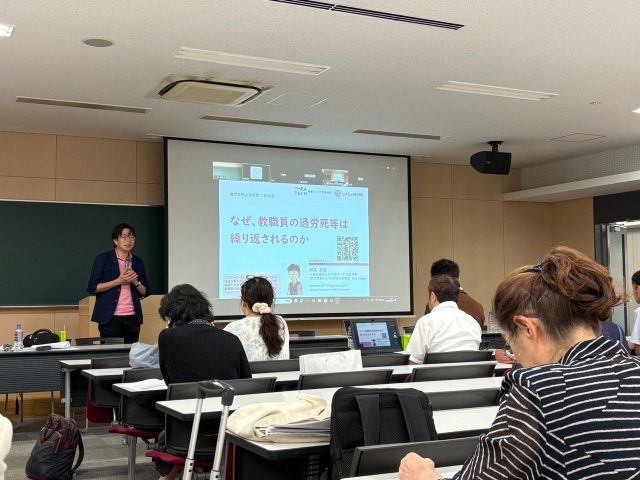
In Japan’s Act on Measures to Prevent Karoshi and Other Overwork-Related Deaths (hereinafter, the “Karoshi Prevention Law”), the term “karoshi and other overwork-related deaths” is defined in Article 2 as “death from cerebrovascular or cardiovascular diseases caused by excessive work-related burdens, or death by suicide caused by work-related severe psychological stress, including such cerebrovascular or cardiovascular diseases or mental disorders.” The law, enacted in 2014, was the result of persistent efforts by bereaved families of karoshi and overwork-related suicides, lawyers, medical professionals, experts, and concerned citizens, to address the overwork-related death issues that had been ongoing since the 1980s. During the late 1980s, at the peak of Japan’s asset price bubble, workers began collapsing and dying from overwork. Although the term “karoshi” had not yet been coined, reports of sudden worker deaths began appearing in the news. In 1988, a group of lawyers and medical professionals established the “Karoshi 110 Hotline” to provide consultation and support.
|
| |
|
| |
|
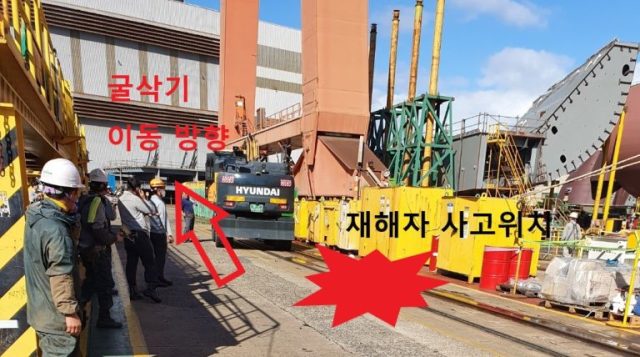
The White Paper on Major Work-Related Accidents at Hyundai Heavy Industries (Volumes I–III) is a long-term record of industrial accidents compiled under the leadership of the Hyundai Heavy Industries branch of the Korean Metal Workers’ Union, with participation from researchers and field activists in labor and industrial safety. The White Paper aims to restore the repeated deaths of workers as a social record and not just as mere accident statistics. The White Paper also aims to identify the structural causes and corporate responsibility for these accidents, and establish foundational data for the improvement of industrial safety systems.
The compilation involved researchers and activists including Jeon Ju-hee, Kim Ye-jin, Lim Yong-hyun, and Son Jin-woo, with advisory cooperation from civic organizations such as the Korean Institute of Labor Safety and Health, the Kim Yong-gyun Foundation, and the Ulsan Work-Related Accident Prevention Movement. Data were collected through cross-verification of decades of union accident records, union newsletter Minju Hanghae, subcontractor newsletters, on-site documents, testimonies from bereaved families and co-workers, and official statistics.
|
| |
| |
|
KILSH is a public interest civil society group focusing on workers’ health and safety. We are working for healthy working conditions for all workers, and for workers to have greater autonomy in their workplaces. We meet and educate workers and trade unions on how to prevent occupational injuries and describe how to get involved in changing the working environment.
We have worked on important issues such as musculoskeletal disorders, long working hours, overwork and mental illness. We have continued our work on workers’ health rights at small-sized businesses, female workers’ health, the climate crisis, the right to stop dangerous work and how risk assessment is conducted and used. These issues are described in our monthly magazine on occupational safety and health with different topics every month. Our translation team provides information about our activities in English.
|
| |
|