|
{preheader}
|
Editor’s Letter
We apologize for not sending out the April newsletter. This is the May newsletter.
Workers at logistics centers in Korea, as well as many delivery workers, have died while on the job. In particular, night shifts and high work intensity are damaging their health and even leading to death. In Korea, a particularly large number of workers have lost their lives at Coupang. In 2025 alone, eight people died while working at logistics centers or delivering packages.
Finally, last year, the issue of night work became a social concern, and a public debate on night work began in South Korean society. However, even as measures to address night work have yet to be implemented, a bill has been proposed to allow early morning deliveries at large supermarkets. Night work damages workers’ health no matter where it takes place. Serious concerns are being raised about a societal trend that prioritizes only convenient and fast consumption without establishing measures to protect workers’ health.
Now is the time for more discussion and for laws and systems to ensure workers’ right to health.
We hope that you will continue to be interested in our activities. Please pass it on to others. If you have any questions, please reply to this email.
Thank you.
|
|
| |
|
Should Night Work Be ‘Managed’ or ‘Reduced’? – Setting the right direction for addressing night work (Jan. 2026)
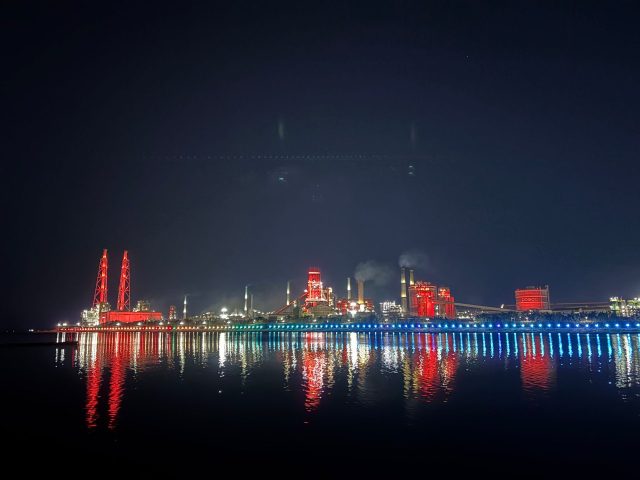
We have grown accustomed to a society where the lights never go out at night. There are essential public services like firefighting, policing, and hospitals, as well as continuous industrial processes like steel manufacturing and oil refining, that must operate around the clock. The problem lies in the fact that night work outside this ‘necessity’ has continued to expand. Nighttime has entered the work schedule to keep production facilities running longer, to meet deliveries faster, and to capture customers’ immediate consumption. In the 24/7 society symbolized by “open year-round” and “24-hour operation,” night work has become the norm, not the exception.
|
| |
|
| |
|
The Reality and Risks of Domestic Content Moderator Labor (2024)
Content moderators are workers who sanction and delete user-generated content (UGC) on social media, online platforms, and similar spaces. They do this by applying various curation practices and technologies to align UGC with standards such as current laws, company terms of service, and local national policies and regulations (Gibson, 2022; Gillespie, 2018; Roberts, 2019). Content moderators play a role in determining the appropriateness of content posted by users across various areas of commercial online spaces—such as posts, comments, and profiles—by labeling, filtering, or deleting it according to given regulations. The criteria for determining inappropriateness primarily include whether content is sexually explicit, violent, humiliating, or discriminatory. The review of content appropriateness begins in real-time as social media users create UGC and post it to the online space (Ahmad & Krzywdzinski, 2022). Most companies possess proprietary filtering technology, enabling automatic filtering to occur simultaneously with UGC posting. Content difficult for AI to judge is then forwarded to employed content moderators. The constant flood of online content necessitates massive real-time management, requiring a large workforce. This demand has expanded to form a global labor market that extends beyond national borders to form a worldwide chain.
|
| |
| |
|
KILSH is a public interest civil society group focusing on workers’ health and safety. We are working for healthy working conditions for all workers, and for workers to have greater autonomy in their workplaces. We meet and educate workers and trade unions on how to prevent occupational injuries and describe how to get involved in changing the working environment.
We have worked on important issues such as musculoskeletal disorders, long working hours, overwork and mental illness. We have continued our work on workers’ health rights at small-sized businesses, female workers’ health, the climate crisis, the right to stop dangerous work and how risk assessment is conducted and used. These issues are described in our monthly magazine on occupational safety and health with different topics every month. Our translation team provides information about our activities in English.
|
| |
|