|
{preheader}
|
Letter from the Editor
Dear subscribers,
Now that the scorching months of July and August have passed, it’s finally starting to cool down a bit.
Last July, the South Korean government announced a large-scale initiative called the “Mega Project.” It stated that, in partnership with major corporations such as Samsung and SK, it would invest nationwide in the semiconductor, AI data center, and physical AI industries.
Although the government cites strengthening national competitiveness and promoting balanced regional development, this project is, in reality, an unprecedented development spree that undermines democratic principles, destroys the climate and ecosystems, and threatens labor rights, workplace safety, and even farmers’ right to livelihood.
For this project, which involves an investment of 800 trillion or 1,000 trillion won, large-scale public support measures have been proposed, including the supply of electricity and water, the construction of transportation and logistics networks, the creation of living environments, regulatory relaxation and tax incentives, and the introduction of special rate plans for AI data centers.
Meanwhile, there is talk of a bill that would allow workers engaged in research and development for related projects to work more than 52 hours per week; expand the list of industries eligible for temporary worker dispatch to foreign-invested companies within the mega special zone; and extend the maximum employment period for fixed-term workers from the current two years to up to four years.
We can only view this as an attempt to undermine the struggles we have waged thus far for job security, reasonable working hours, and workers’ right to health—and to completely disregard workers’ health in the name of development.
We are fighting against this project and the legislation to protect workers’ right to health and to stop this project, which seeks to exploit our resources.
We hope you will take an interest in this issue.
We hope that you will continue to be interested in our activities. Please pass it on to others. If you have any questions, please reply to this email.
Thank you.
|
|
|
| |
|
The Fight for the Safe Rates System Is Far From Over (Mar. 2026)
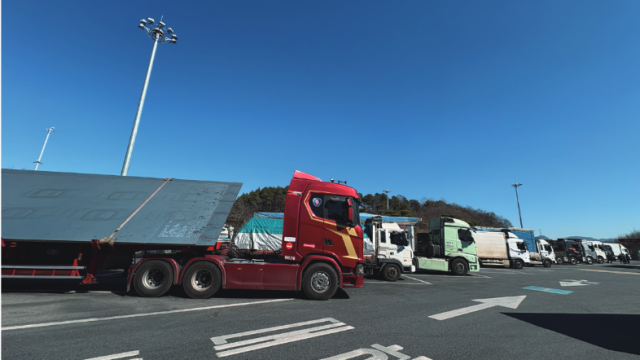
In 2024 alone, 594 people were killed in collisions with freight trucks on South Korea’s roads. According to the Korea Road Traffic Authority, this accounted for 23 percent of all traffic fatalities nationwide, which totaled 2,521 deaths. More alarming is the fatality rate of truck-related accidents. Data from the Korea Expressway Corporation shows that between 2021 and 2023, traffic accidents involving trucks had a fatality rate of 11.5 percent—significantly higher than the 8.4 percent rate for other vehicles. During the same period, 54 percent of all traffic deaths on the nation’s expressways were caused by accidents involving large freight trucks.
The danger becomes even more alarming in the rain. According to the Korea Road Traffic Authority, between 2022 and 2024 the fatality rate of truck-related accidents on expressways during rainy conditions was 5.6 times higher than in clear weather, reaching 6.94 deaths per 100 accidents. In short, when it rains, it’s best to stay clear of freight trucks on the highway.
|
| |
|
| |
|
Occupational Injury Experiences and Coping Strategies of Migrant Workers: The Limits of Public Protection and the Utilization of Ethnic Networks (2025)
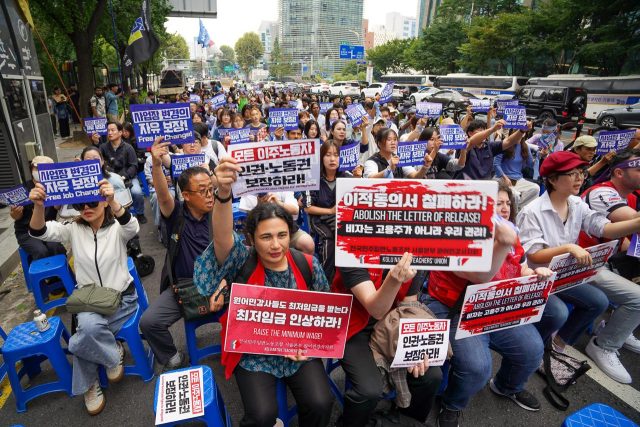
This study analyzed the role ethnic networks play in the process of handling occupational injuries among migrant workers from the perspective of a safety net. An analysis of in-depth interviews with migrant workers and professional occupational injuries support providers revealed that, in the process of addressing occupational injuries, “injury victims” and “support providers” were not separated into fixed groups; rather, a cyclical structure was identified in which the knowledge and information acquired through the experience of a occupational injuries were transformed into resources that subsequently helped other members of the same ethnic community cope with their own injuries. Migrant workers’ experiences with occupational injuries did not end as mere personal tragedies; rather, they were shared and accumulated within ethnic networks, forming the basis for mutual aid.
|
| |
| |
|
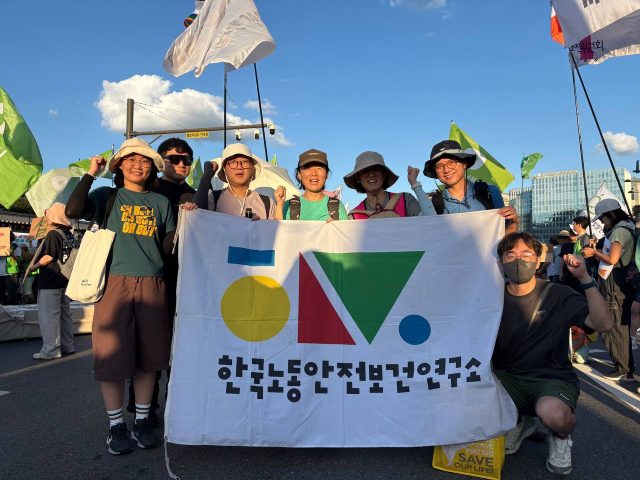
KILSH is a public interest civil society group focusing on workers’ health and safety. We are working for healthy working conditions for all workers, and for workers to have greater autonomy in their workplaces. We meet and educate workers and trade unions on how to prevent occupational injuries and describe how to get involved in changing the working environment.
We have worked on important issues such as musculoskeletal disorders, long working hours, overwork and mental illness. We have continued our work on workers’ health rights at small-sized businesses, female workers’ health, the climate crisis, the right to stop dangerous work and how risk assessment is conducted and used. These issues are described in our monthly magazine on occupational safety and health with different topics every month. Our translation team provides information about our activities in English.
|
| |
|